
Public Inquiry on Highthorn Surface Mine
Kingston Park Stadium, Newcastle upon Tyne, 1 June 2017
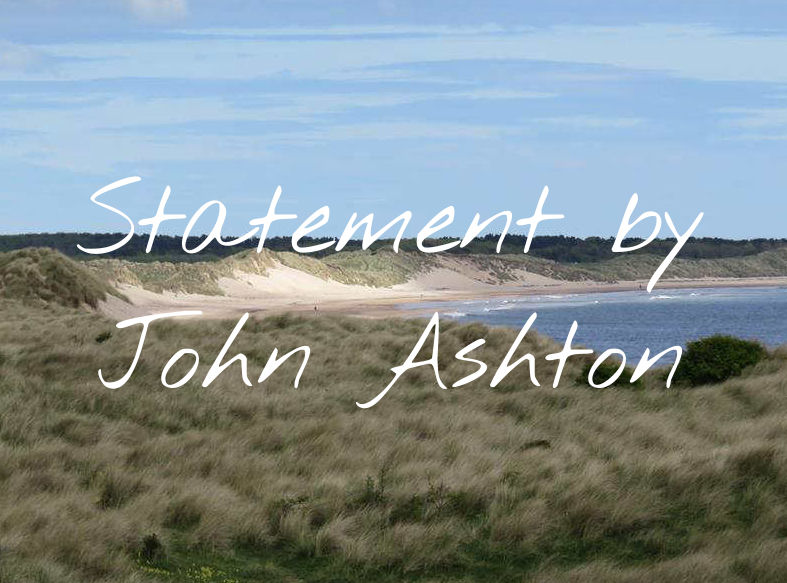
Statement by John Ashton, CBE
1. I am grateful to you, Sir, for the opportunity to address you, and for accommodating my circumstances by letting me speak now.
2. The proposal for an opencast coalmine behind Druridge Bay has aroused strong feelings and divided communities. It has raised questions about the quality and impartiality of local governance in Northumberland. And, as the Secretary of State has recognized, the outcome affects our national, and international, interests as well as our local ones.
3. It is vital in those circumstances that all voices now be heard, fairly and on an equal footing. That was not the case when the County Council took the decision you are here to review. I applaud you and your team for going to great lengths to ensure that it will be the case this time.
4. I hope you will reject the Banks proposal, in the national and the local interest, in line with the mandate from the Secretary of State, and the National Planning Policy Framework. But before I explain why, and to help you evaluate what I say, I should clarify my standing.
5. Although I am on one side of this debate and not the other, I got there from a position of independence. I don’t speak for anyone else; I don’t answer to anyone else; I am not a member of any relevant organization or campaign; and I am on nobody’s payroll. My only current capacity is as a full-time carer for my mother, who is in palliative care at home in South Gosforth, across the Great North Road.
6. So I do not stand to gain or lose materially from the eventual decision by the Secretary of State, in what will by then be a new Government. But that does not diminish my stake in it.
7. For six years from 2006-2012, it was my privilege to serve three Foreign Secretaries as Special Representative and roving Ambassador for Climate Change. I was closely involved in the international debate on climate and therefore on energy, since the biggest choices on climate are about energy. And I involved myself equally in our domestic debate on energy.
8. Of relevance here, I was the first official to argue inside our Government that we would need rapidly to stop burning coal for electricity in the UK. That began the conversation that led to the coal phaseout policy we now have.
9. In any case, that and other roles over twenty years have given me professional experience in relation to our national policies on climate, on energy and on coal. I would like to address you, first, on that basis: to speak, as it were, from my head.
10. But I also grew up nearby, in Jesmond.
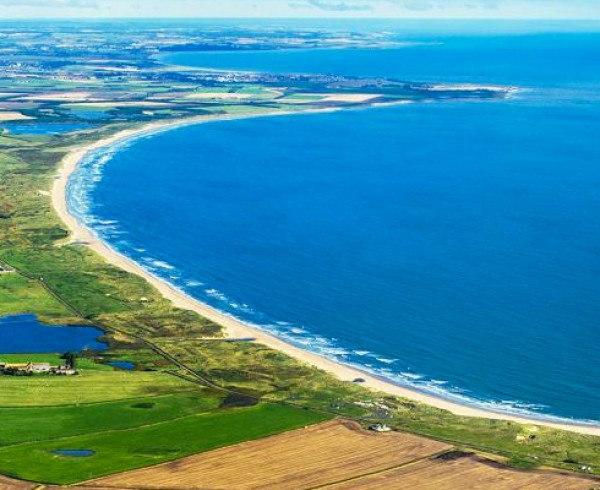
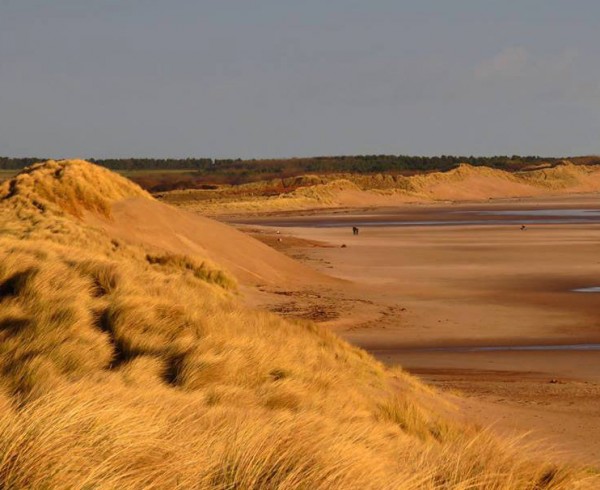
11. Druridge Bay was the seaside. It was buckets, spades and beachballs. It was my Mum and my late Dad, brothers, sister, dog together for the afternoon with all cares left at home. It was the blessing of living close to such a wonderful, liberating place.
12. Later, I had just married and returned to London after a spell overseas. My wife and I came to visit. One sweltering August day we went to Druridge Bay. I remember plunging into the sea to cool down.
13. If you want to cool down, the North Sea is quite a good place to do it, even when the sun is melting the ice creams. And if you plunge straight in your body seems to contract in shock. My fingers must have done so, because my precious wedding ring slipped off, fell gently through the water, and settled in the sand. I can see it now, glinting in the sunlight.
14. Two hours later, fingers raw from scrabbling, shivering with cold, I abandoned my search. My wife took it well. We bought a new ring, which I wear today. But my first wedding ring must still lie in those shallows, waiting to be rediscovered.
15. Now here I am again looking after my Mum. It is wonderful to be back in the northeast: there is no better place in Britain. But it’s also, this time, gruelling and intense.
16. Whenever I can I go to Druridge Bay: to recharge; to walk; or just to sit and absorb the sights and sounds until I feel part of the tapestry they weave.
17. I’ve never felt closer to nature than I do at Druridge Bay. It is a place of rare tranquility, beauty, and for someone in my position, solace. So everything I say today comes also from the heart.
18. I hope that doesn’t cross the limit of what is admissible here. I do not envy you, Sir, your position. What comes from head and heart are hard to weigh in one balance. But I hope you will attach due weight to the latter. There are countless others who feel as I do about this special, fragile place. Countless others who stand to lose something on which no price can be put if its delicate balances are disturbed.
********
19. Anyway, to return to my professional experience, the Secretary of State has asked if the Banks proposal fits with Government policies on climate change, the rapid phaseout of coal-fired power, and renewable and low-carbon energy.
20. In my opinion, as somebody who lived many of those policies as they took shape, the Banks proposal is in contempt of them. To allow it would harm our national interest, out of proportion to the small quantity of coal that could be extracted and any short-term gains that might accrue to a small number of people at the expense of everyone else.
21. Other witnesses will discuss the detail of our policies. They might talk about tonnes of carbon, emissions trading, the demand for coal in domestic and international markets, and so on.
22. But the detail cannot be understood except inside the picture that forms when you put it all together. And without that picture one can’t reach a coherent view when details are contested, as they may be here. So if you will permit me, I’d like to identify some essential features of the whole picture.
23. It is now accepted, and embedded across the policy spectrum, that our national interest lies in a successful response to climate change.
24. Less well understood, perhaps, is that this is not an ordinary national interest, it is an overriding one. If we fail to meet it, it will become increasingly difficult to secure our other interests, not least to keep our country secure and prosperous. The consequences of unmitigated climate change would be too destabilizing. We already see signs of this around the world.
25. To secure an overriding interest, you go to special lengths. Success is imperative not just desirable. Policy failure is unconscionable.
26. That was the rationale for the Climate Change Act with its binding carbon budgets. It is why we must be rigorous in applying climate policy, at all levels and scales, even for small projects. It is why when there is ambiguity we must go with the grain of our climate imperative not against it.
27. The question arises: what constitutes a “successful” response to climate change? In fact, the measure of success is well established, globally and in the UK.
28. A decade ago, a consensus took shape that the threshold beyond which the impacts of climate change were likely to become unmanageable was around 2°C. It was a political consensus, informed by science, within and between governments. I played a part in shaping it.
29. Accordingly, it was agreed that each country should contribute through its domestic policies to a global response that would give us a good chance of avoiding more than 2°C of warming. The Climate Change Act of 2008 is designed to ensure that the UK does just that.
30. Subsequently it became clear that climate change was likely to do more harm, more quickly than expected. So in the agreement reached at Paris in 2015, the international community raised the bar, agreeing unanimously to aim for no more than 1.5°C of warming.
31. The UK was an architect of the Paris Agreement. We must now ensure our own ambition matches it. As our policies develop they will intensify, including over the lifetime of Highthorn.
32. There is debate about the detail of what this means, for the economy, for energy, and for specific infrastructures, technologies, and fuels; and indeed for different countries.
33. Much of this debate is special pleading. Companies and industries with carbon-intensive business models – business models that are inherently part of the problem – sometimes say that of course they want a successful response to climate change while trying to ensure that others must change before they do, even if that undermines the effort as a whole.
34. In any case, however those debates play out, it is clear that to have a good chance of keeping climate change within 2°C (let alone 1.5°C) we need:
a carbon-neutral economy globally well before 2100;
carbon-neutral energy globally soon after 2050;
and in wealthy countries like ours, carbon-neutral electricity by around 2030.
These inescapable realities have two further consequences.
35. First, globally, there is no room for the opening up of new fossil fuel resources. What will be available from existing ones is way more than can be burned within the climate threshold. That applies particularly to coal, the most carbon-intensive of all fossil fuels. Nearly all of what could be developed must stay in the ground.
36. Second, where alternatives are available and affordable, as they are here, we must get coal out of our energy system as a matter of urgency, well within the lifetime of this project. We must bear down on coal from both ends of its value chain, that is, from combustion and extraction.
37. That is why we have a coal phaseout, and why it will only have its intended effect if it is taken to include an embargo on new mines.
38. Not all of this is explicit in UK policies. I have tried to bring out the underlying logic and purpose of those policies. If policies in any area are interpreted against the grain of logic and purpose, they will fail, and the first aim here is to avoid policy failure.
39. Some may claim that for a small project like this there is room in our carbon budgets for the emissions concerned. Or, emissions from burning the extracted coal should not count, since policy acts through the carbon price, on generators not miners. Or, this project is actually good for the climate because it will displace coal we would have had to import. Or good for energy security because it will make us less dependent on distant and unreliable suppliers. Or, even if we don’t need the coal for power, we will need it to make cement or steel. Or again, if we don’t need it at all we should export it.
40. Even on their own narrow terms, these mutually contradictory arguments are all spurious and self-serving. They collapse instantly on exposure to the reality of how the energy system actually works.
41. No project, even a small one, can be isolated from the system of which it is part. Our policies need to replace the carbon-intensive energy system with a carbon-neutral one in the UK, and help us leverage a similar restructuring everywhere.
42. If we now start approving new coalmines, or start exporting coal we no longer need to burn, that restructuring will be harder, it will take longer, and it will cost more.
43. In diplomacy you must walk your talk. Our diplomats, with like-minded counterparts, must build consensus everywhere on keeping fossil fuels, especially coal, in the ground. They must build support for coal phaseouts like ours in other economies. If we approve new mines in the UK, those we seek to influence will rightly send our diplomats packing for hypocrisy.
44. We ran from my office a sophisticated campaign of coal diplomacy. These are lessons we quickly learned.
45. And it is not only in diplomacy that what you do and what you say must match.
46. To restructure the energy system, policy must focus on investment. It must push down the cost of capital to build the low-carbon infrastructure we need; and push it up for investments, such as this one, that would lock in more fossil energy.
47. It is our policies that shape the markets in which investors risk their money. They want to see clarity in government about the logic and purpose of policy. They want to see alignment across policies, including in planning decisions.
48. If they see alignment they will conclude that the markets they invest in will evolve in ways they can understand and predict. There will be less political risk and the cost of capital will fall. If they do not see it, the perception of risk and the cost of capital will rise, chilling investment.
49. A government walking its talk cannot walk in two directions at once. Approval for new coalmines would take us backwards when we are trying to go forwards.
50. But no government can bind its successors. An election is coming. A few cantankerous contrarians in politics and the media would have us abandon our climate commitments.
51. That’s not going to happen. There is no sign of it from any of our major parties. Across our politics there has long been a consensus, mirrored in public opinion, that we must be part of the solution not part of the problem on climate.
52. The tide is also now turning helpfully in the energy system itself, especially in electricity.
53. The cost of renewable technologies and the infrastructure they need has plummeted, faster than anyone expected. Digital power systems can accommodate intermittent generation on grids, including wind and solar. The need for baseload power, the last residual justification for coal, has evaporated.
54. “The Big Green Bang: How Renewable Energy Became Unstoppable”, as the Financial Times put it.
55. Meanwhile the coal phaseout is becoming self-fulfilling. The proportion of our power coming from coal has fallen like a stone. In the government’s own scenarios, coal will have vanished from the grid not by 2025 but three years earlier, and even that looks cautious.
56. And coal is in retreat everywhere: in the US; in Germany, France and much of Europe; in China, India, and beyond. This retreat is no longer news in government, in the City, and most of business.
57. We hear the President may pull the US out of Paris. He can, yes, put the US on the wrong side of history. He cannot put history into reverse.
58. But the coal industry has shown a remarkable capacity for denial. It is hard for the leadership of any company to accept that its business model is collapsing, and sometimes easier to pretend it isn’t, until reality starts to bite in the form of bankruptcies, writedowns, and stranded assets. Reality is now biting for many who have not had the foresight to plan an orderly exit from coal.
59. Sadly the Banks Group has so far just kept digging.
60. A Banks spokesman recently claimed: “coal will remain an important part of the UK’s energy mix, at least in the medium term”. This was overtaken by facts before he said it. The Banks website describes coal, beyond parody, as a “crucial bridge” to the low carbon economy.
61. It is as if this company does not even want to be taken seriously on climate change. Its strategy seems to be to do what it can to hold back the tide, and to hope it is small and local enough that nobody will notice as it tries to squeeze through the cracks of national policy.
*******
62. If you drive from my Mum’s house in South Gosforth to Cresswell by Druridge Bay, you take the A189, the old Spine Road. There are many roundabouts.
63. Note the names on the signs by each one. Killingworth, Weetslade, Seghill, Seaton Delaval; north to Lynemouth, Woodhorn, Ellington. A roll-call of old deep pits at the heart of the Northumberland coalfield. A roll of honour to the men who dug the coal, and to their families and communities.
64. Another name on a sign. Burradon near Cramlington, where in 1860 coal seam gases exploded killing 76 men and boys. The youngest was Jacob Weatherley. He was 10 years old.
65. Or Hartley nearby, where two years later the beam of the pumping engine snapped and blocked the shaft. 204 men and boys died slowly in darkness despite desperate efforts to rescue them. If the owner hadn’t refused before the disaster to pay for a second shaft they could have been saved.
66. The youngest was John Armstrong. He too was 10.
67. Nothing shaped this area more than coal. And our coal shaped our nation too, as the industrial revolution took off. It is a heritage we are in danger of forgetting. A proud heritage.
68. But here of all places we know the age of coal is over. The question today is: “how can we honour those whose toil and endurance made it shine so bright?”
69. It would do them no honour to scrabble under boggy meadows in a place of outstanding but easily sullied beauty for a few last scratchings of a dirty fuel whose continued exploitation threatens the security and prosperity of our country and the world.
70. Those miners were the backbone of the old economy, an economy of heavy, polluting industry. They would want us to be the pioneers of the new, clean economy, in harmony not in conflict with our desire to live long healthy lives and to cherish not spoil our beautiful places.
71. We have treasure in the northeast more precious than any coal still in the ground.
72. The talent of our people is worth more than all that coal.
73. The bounty of our farmland is worth more than all that coal.
74. The beauty of our landscapes and coastline is worth more than all that coal.
75. The pageant of our history, alive in our landscape, a crucible of our nation, is worth more than all that coal.
76. Behind Druridge Bay, perhaps bisecting the Highthorn site, runs an ancient Pilgrim’s Way. Nearly fourteen centuries ago St Cuthbert might have followed it from Holy Island down to Whitby, for the great Synod where the destiny of the English Church was decided at one of the most formative moments in our past.
77. The pleasure of those who visit us, and then come back and back again, drawn by the warm welcome and beauty and history they discover here, is worth more than all that coal.
78. Tourism in the northeast has a great future. Perhaps that’s why Banks have just made a gift to the Northumberland Tourism Awards. But it seems like a cynical exercise in public relations when you remember that nobody wants to spend their holiday next to an opencast coalmine.
79. Our outstanding tradition of civil engineering is worth more than all that coal.
80. That tradition flourishes still in our universities and colleges, in what we make, and in the values and memories of our collective unconscious. We need it now more than ever, to drive the transition to carbon-neutral energy. And of course we owe it to a past built on coal and heavy industry.
81. We stand here now at the junction between a proud past and a future full of promise waiting to be built.
82. Coal has no place in that future. To claim that it does, to claim an entitlement to keep digging, is not to honour those who forged our past. It is to insult them.
83. When somebody approaches the end of a long career, especially if it has been successful, they often face a choice.
84. Do they close their eyes and cling to a view of the world that once brought success but is now overtaken. Or do they open their eyes so that as the world changes, their view of it does too? Do they keep working for progress, or do they dig in their heels and work against it?
85. By many accounts, the writ that runs in the Banks Group is the writ of Harry Banks. He founded the company, he gave his name to it, he built it up over forty years, he presides to this day on its Board.
86. His career has been a success. No reasonable person could begrudge him any pride in it.
87. I do not hope most of all, Sir, for a decision by the Secretary of State. I hope that Mr Banks will read the writing on the wall.
88. I hope most of all he will withdraw this application and submit no new ones, in the northeast or anywhere else. I hope he will, gradually and with care for his employees and their families, now wind down his coal business and build a position in the new, clean economy of the northeast.
89. The Banks Group is well placed to help put the northeast back where it should be, at the cutting edge of progress in our country.
90. Whether to do that is a matter for Mr Banks and his Board. If they do not, the Secretary of State will have to decide on the basis of your advice whether to approve to the Highthorn project.
91. Please in that event advise him to say “no” to Mr Banks, “no” to our County Council, “no” to a misbegotten, opportunistic project that should never have got this far. “Yes” to Northumberland and the future we deserve.





Leave a Comment